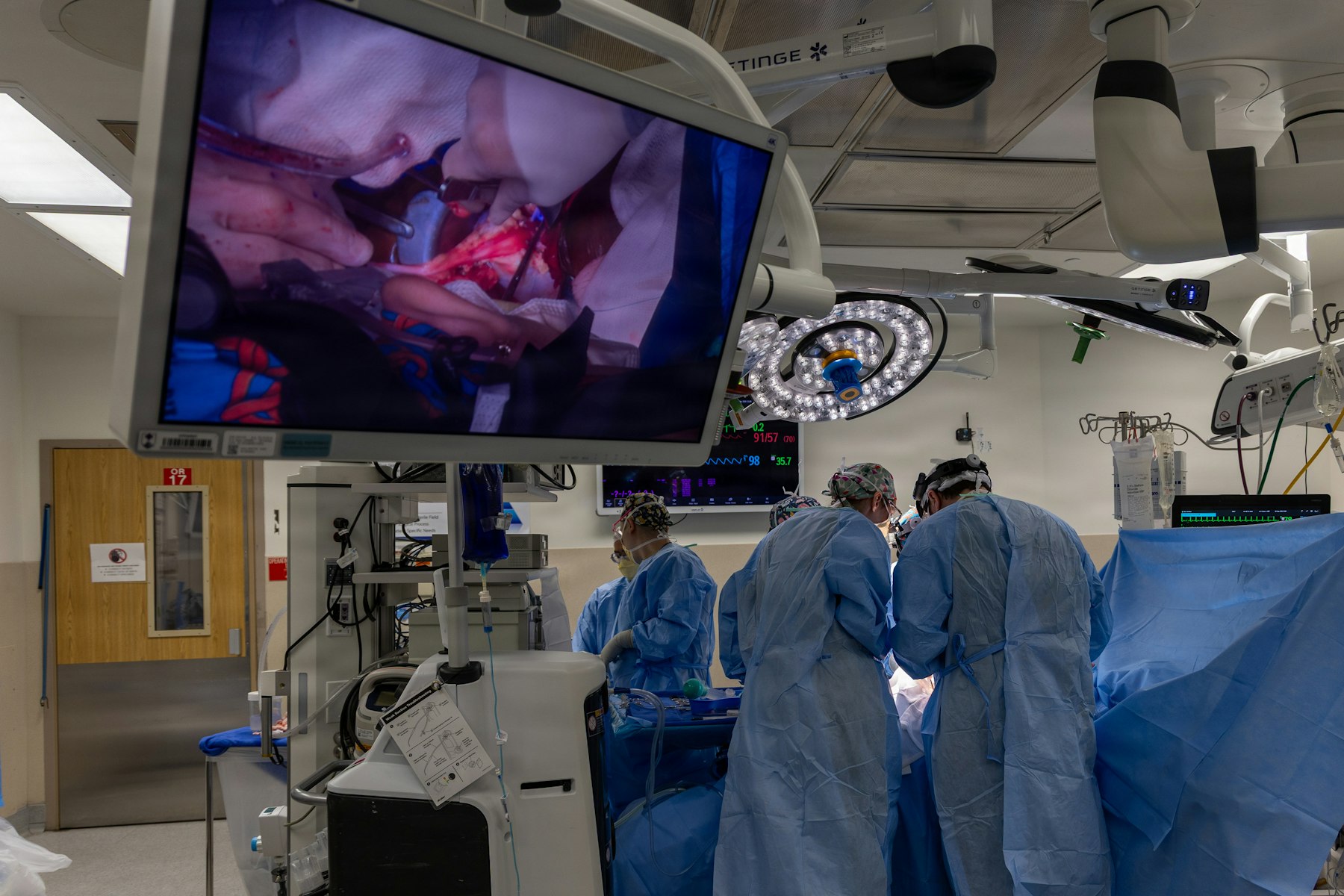
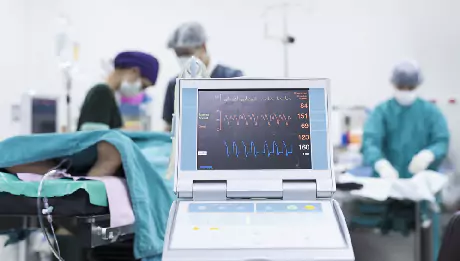
An intra-aortic balloon pump (IABP) is a small balloon placed inside the aorta, the body’s main artery. It helps your heart move blood to the rest of your body and gives the heart muscle a chance to recover.
Most patients are placed in the cardiac catheterization lab or the intensive care unit. Here is the path from start to finish.
Good to know: the balloon only provides support for a short time while your heart recovers or treatment takes effect.
01
Preparation
You receive monitoring leads, IV access, and medicine for comfort. The skin over the groin is cleaned and numbed with local anesthetic.
02
Insertion
Using X-ray or ultrasound guidance, your cardiologist passes the deflated balloon catheter into an artery in the groin and advances it into the upper descending aorta.
03
Pumping in sync with your heart
The pump console reads your heart rhythm. The balloon inflates between beats, which improves blood flow to the heart muscle, and deflates just before the next beat, which lowers the effort your heart needs to push blood out.
04
Monitoring in the ICU
Nurses check your blood pressure, heart rhythm, leg circulation, and insertion site often. You will rest with the affected leg kept straight while the pump is in place.
05
Weaning and removal
When your heart is strong enough, the team slowly reduces the pump’s support. The catheter is then removed, and pressure is held on the site until bleeding stops.
Who it helps
When an IABP may be recommended
Your care team may suggest a balloon pump when the heart cannot keep up with your body’s needs, for a short time.
01
Heart attack with weak pumping
When a large heart attack leaves the heart muscle too weak to circulate enough blood, an IABP can reduce strain while treatment takes effect.
02
Cardiogenic shock
If blood pressure falls dangerously low because the heart is failing, the pump helps maintain blood flow to vital organs.
03
High-risk procedures
Some patients receive an IABP before or during stenting or bypass surgery to protect the heart during the procedure.
04
Heart valve or structural complications
When a problem such as severe valve leakage develops after a heart attack, an IABP can stabilize you until definitive repair.
05
Chest pain that medicine does not control
For severe unstable angina, the pump can improve blood flow to the heart until a procedure can be done.
06
Heart rhythm problems caused by poor blood flow
When the heart is not getting enough blood, it can develop dangerous rhythms. An IABP can improve blood flow to the heart muscle and help steady it while the cause is treated.
Family support
Questions about IABP placement? Talk to our team.
If you or a family member may need heart support, our cardiologists will explain your options in plain language.
We work with many health plans so you can focus on your recovery. Our billing team will check your coverage and explain your costs before and after care.