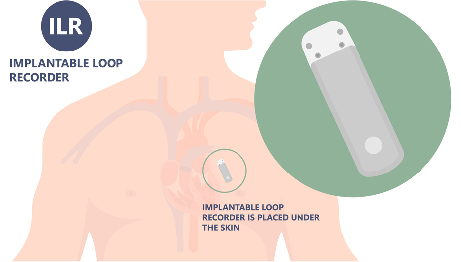
An implantable loop recorder, also called an insertable cardiac monitor, is a tiny device placed just under the skin of the chest. It watches your heart rhythm continuously for years, so an irregular rhythm that shows up only once in a while can finally be caught and recorded.
Short-term monitors only help when symptoms happen during the monitoring window. A loop recorder is chosen when symptoms are rare, or when a hidden rhythm problem is suspected after other tests have not explained what is going on.
Unexplained fainting (syncope)
When fainting is recurrent and an initial workup, including an ECG and echocardiogram, has not found the cause. A loop recorder can show whether a pause, a very slow heart rate, or a fast rhythm was responsible.
Stroke of unknown cause
After a cryptogenic stroke, long-term monitoring looks for hidden atrial fibrillation.
12%
AFib found with a loop recorder at one year
2%
with standard follow-up (CRYSTAL-AF trial)
Infrequent palpitations or dizziness
Fluttering, skipped beats, near-fainting, or a racing heart that occurs a few times a year is nearly impossible to capture on a 2-week monitor. The recorder can be activated when you feel symptoms.
Atrial fibrillation follow-up
To measure how often atrial fibrillation returns after ablation or a medication change, and to detect silent episodes you may not feel.
The procedure
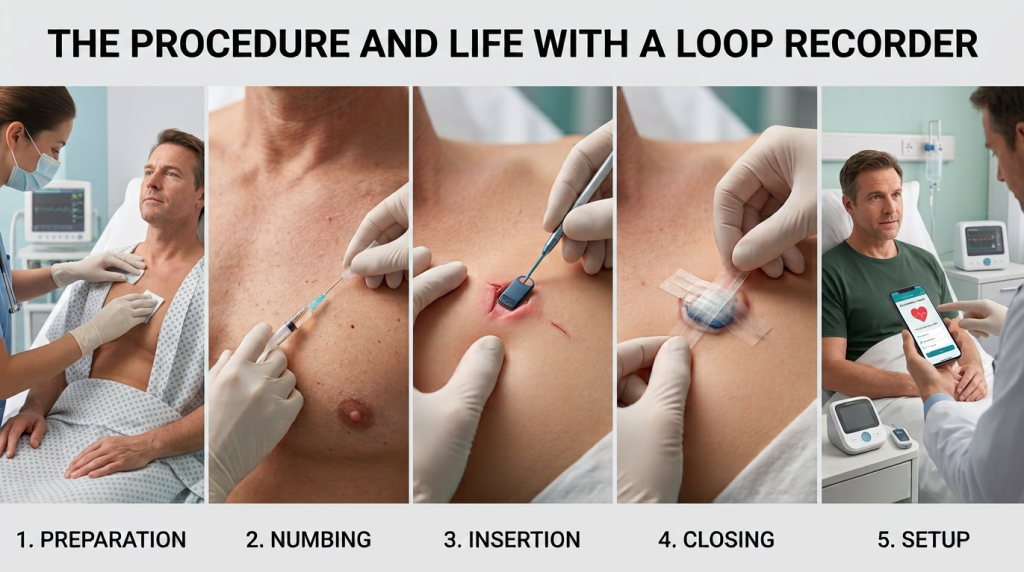
The procedure and life with a loop recorder
Placement usually takes only a few minutes of procedure time, and most patients go home the same day.
1. Preparation
Your chest is cleaned and covered. Most patients do not need to fast. Tell the team about blood thinners and allergies beforehand.
2. Numbing
Local anesthetic is injected over the left side of the breastbone. You stay awake and feel pressure but no sharp pain.
3. Insertion
A cut of about 1 cm is made, and a small pocket is formed under the skin. The device, about the size of a small flash drive or smaller, is slid into place with a specialized insertion tool.
4. Closing
The incision is closed with skin glue, adhesive strips, or a single stitch. The device begins recording immediately.
5. Setup
The device is paired with a home monitor or a smartphone app, and you are shown how to record symptoms with a handheld activator or the app.
Where it sits: just under the skin on the left side of the chest, over the heart.
Pairs with your phone
Readings are sent from a home monitor or app, and you can mark symptoms when you feel them.
Coverage and billing for loop recorder care
We accept most major insurance plans. When a loop recorder is placed for a documented medical reason, such as unexplained fainting or a stroke of unknown cause, it is typically covered under your medical benefits. Requirements differ by plan.